Archive Research: The Complete Guide to Accessing Records That Aren't Online
Most historical records were never digitised. This guide explains why, and how to get a record out of an archive, library, registry, or museum that a search engine cannot reach.
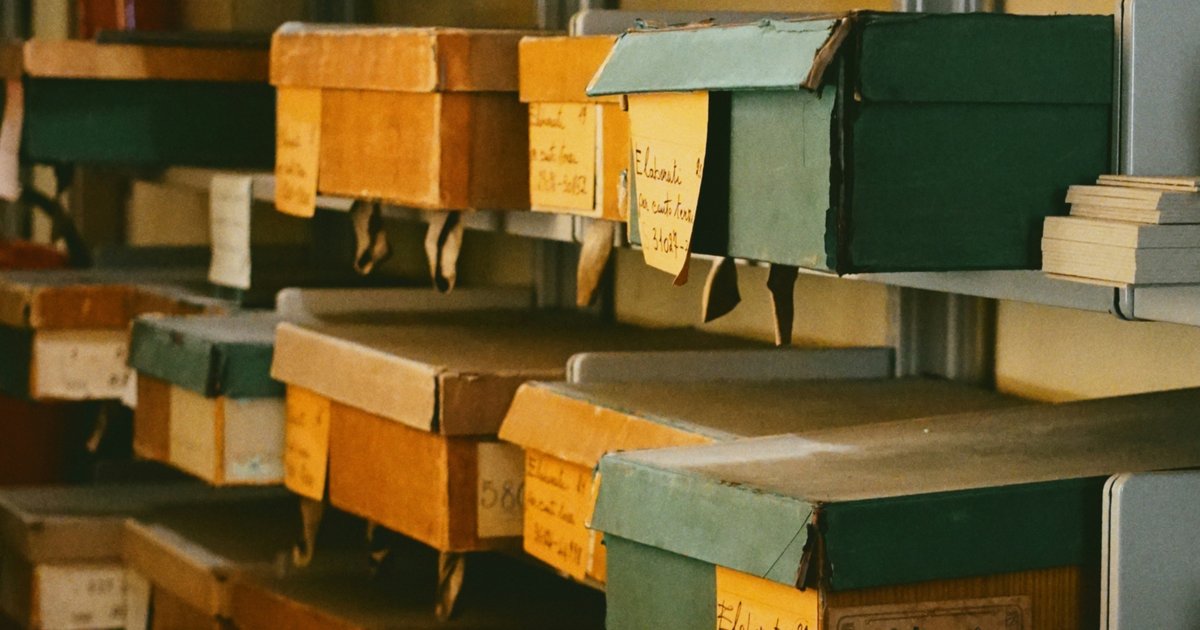
- Most historical records were never digitised. Institutions scan what is requested most often or what a grant covers, and everything else can wait for decades.
- Source has vetted researchers in 129 cities across 42 countries who already hold reading-room access at a local archive, library, registry, or museum.
- The median first response on Source is 18 hours, and the median fulfilled cost is £65 per request.
- Most requests pay between £40 and £400 depending on complexity, and researchers keep 85 percent of the job value.
- The fastest route to a record that is not online is a researcher who already works with that specific institution, not general research skill.
Every day, researchers, lawyers, genealogists, collectors, journalists and academics need access to records that exist but aren't online. Sometimes those records are held in archives. Sometimes they're in a university library, sitting inside a government facility, a museum collection, a corporate archive, or a private collection.
What they all have in common is simple: Google can't retrieve them. The records are sitting on a shelf somewhere, and someone with the right access can walk right through and pick them up.
This guide uses archival research as its starting point. But the underlying problem, and everything below about why it happens and what actually works, applies just as much to a library special collection, a government registry, or a museum archive as it does to a traditional archive.
What is archival research?
Archival research is the process of locating, requesting, and retrieving historical records held in archives, libraries, government facilities, museums, and private collections, most of which have never been digitised. It covers everything from birth certificates in a small parish office and a corporate filing from the 1960s, to an auction catalogue documenting who owned a painting fifty years ago.
Catalogues, finding aids, and institutional indexes usually confirm that a record exists easily enough. A finding aid, the kind of descriptive index archivists at institutions like national archives and university special collections publish for a given collection, will often tell you a document exists and roughly where it sits. What it won't do is retrieve it on your behalf. Locating the right materials and managing to retrieve them when you actually need them is where the challenge lies.
Archival research, archive research, and historical archive material
These terms get used almost interchangeably, but it helps to know the shades of difference. "Archival research" tends to show up in academic and methodology contexts, describing a formal research approach built around primary sources held in archives. "Archive research" is the more practical, everyday version of the same idea, and it's usually how people phrase it when they need help with a specific record rather than a research methodology. "Historical archive" describes the material itself, the body of mostly undigitised documents, photographs, filings and correspondence sitting in institutions worldwide. This guide uses all three somewhat interchangeably, in the way most people actually search for and talk about this work.
Why archive research is still difficult in 2026?
It would be reasonable to assume that, this deep into the digital era, most of what matters has already been scanned. Go looking for a specific historical document, though, and that assumption falls apart fast.
Digitising an archive costs real money and takes real time. Most institutions simply don't have enough of either. So they prioritise. They scan whatever gets requested most often, whatever a grant happens to cover, or whatever's too fragile to keep pulling off the shelf. Everything else waits its turn, sometimes for decades, with no guarantee it ever moves up the list.
Even large, well funded national institutions hold far more than they've managed to scan. A national archive might have fully digitised its most requested series, while an entire adjacent collection, just as complete, just as accessible in person, has never been touched by a scanner. There's usually no way to tell from outside which category a record falls into until someone actually checks. That's true whether you're looking at a parish register in rural Italy, a corporate filing in a national registry, or an auction house's back catalogue from the 1950s.
Budgets aren't the only reason either. Some material can't be digitised safely without conservation work first, and some archives simply haven't made it a priority. Either way, you end up with the same thing: a document that's fully catalogued, easy enough to request in person, and completely invisible to a search engine.
Common myths about digitised archives
A few assumptions tend to send people down the wrong path before they've even started.
"If it's important, it's already been scanned." Not necessarily. Importance and digitisation priority don't line up as often as you'd think. A document can be historically significant and still sit untouched, simply because it wasn't the material a grant happened to target.
"If I can't find it on Google, it probably doesn't exist." This one causes the most wasted time. Search engines only index what's been put online. A record's absence from search results tells you nothing about whether the physical document exists, only that nobody's digitised and published it yet.
"National archives have everything digitised, so smaller institutions must too." Usually it's the opposite. Larger, better funded institutions have digitised more, proportionally, than small local archives, parish offices, or private collections, plenty of which have no digitisation programme at all.
"If an archive doesn't reply to my email, the record isn't there." A missing reply is far more often a staffing problem than a real answer. Archives are frequently short staffed, and a request from overseas can sit unanswered for weeks on end without ever actually being rejected.
Your options for accessing an archive, and where each one falls short
Once you know the record you need only exists on paper, you're really choosing between four paths. Each one has a real trade off, and knowing them upfront saves a lot of wasted time.
Visit the archive yourself. If you can travel, this is usually your most reliable option, because you control the process directly. The catch is cost and time. Flights, accommodation, and time away from work add up quickly, especially for archives abroad. Reading rooms also run on their own schedules: fixed hours, booking systems, and handling rules that can catch you off guard.
Email the archive and wait. Many archives will accept research requests by email, and some do respond quickly. But it's completely normal to wait weeks, sometimes months, for a reply, particularly from smaller or short staffed offices.
Hire an independent researcher. This can work well, provided you already know someone with genuine access to the specific archive you need. Finding the right person, and verifying they're actually qualified rather than just willing, can take almost as long as the research itself.
Use a research marketplace like Source. You request research by describing what you need, and a vetted researcher who already works with that specific archive picks up the job, quotes you a price, and retrieves the material, usually within the week.
Here is how the four options compare on typical cost and turnaround.
| Option | Typical cost | Typical turnaround |
|---|---|---|
| Visit the archive yourself | £800 to £2,400 | 3 to 7 days, plus travel |
| Email the archive directly | £0 | 3 to 12 months, often no reply |
| Hire a freelancer cold | £300 to £900 | 2 to 6 weeks, if you find one |
| Source | £65 median | Within the week |
Figures are typical ranges. Actual cost and turnaround vary with the archive, its location, and how complex the retrieval is.
When you should contact an archive directly, and when you shouldn't
Going straight to the archive still makes sense in some situations. If the institution has a strong digital request system, publishes clear turnaround times, and the record you need falls into a commonly requested category, a direct email or online form is often genuinely the fastest route. Large national archives with dedicated reproduction departments tend to fall into this category.
It stops making sense once any of a few warning signs show up. If the institution has no online request system at all, if it's a small local repository without a dedicated research team, if the record is in a language or script you can't read yourself and they don’t offer translating or transcription services, or if you're on any kind of deadline, direct contact usually turns into a waiting game with no clear end. In those situations, someone who already works with that specific archive, and understands its actual process rather than its published one, will almost always get there faster.
A useful rule of thumb: the smaller and more local the institution, the more a direct email tends to underperform, because these offices exist primarily to serve their reading room members, not requests that arrive from abroad.
What actually gets a record out of an archive
Once you've ruled out a direct request, the next question is what actually works. In practice, it comes down to one thing: whether the independent researcher handling your request already has a standing relationship with that specific institution.
Researchers who work with an archive regularly already know its request process, its booking system, lead times, etc. They can locate material efficiently not because they're more thorough than anyone else, but because they're already on the ground, and they've already processed similar types of requests before. That local, standing relationship is the real bottleneck this entire field runs into, and it's the thing that's genuinely hard to shortcut any other way.
This is the gap Source exists to close. Source is a peer-to-peer research marketplace that connects people who need access to archives, libraries, registries, museums and special collections with vetted local researchers who already hold the necessary access and credentials. It supports genealogy research, provenance research, due diligence, and academic research, the four situations this guide walks through in detail below, and it works the same way regardless of whether the record in question sits in a national archive, a university library, or a government registry.
How professional researchers approach archive requests differently
There's a noticeable difference between how a first time requester approaches an archive and how an experienced researcher does. It's worth understanding even if you're planning to try this yourself.
A first timer usually starts on the archive's website, finds a general enquiries address, and sends a broad description of what they're after. An experienced researcher starts somewhere else entirely: with the institution's finding aids and catalogue structure, working out exactly which collection, box, or folio number the material likely sits in before making any contact at all.
That's the difference between "do you have anything about this artist" and "can you retrieve item 14 from collection MS-204." Very different request. Much faster to fulfil.
Experienced researchers also tend to know an institution's unofficial process, not just its published one. A lot of archives have a faster route for specific, well defined requests than their general enquiry page suggests, but that route usually isn't written down anywhere. It's learned by working with the same institution over and over. That's a big part of why local access beats general research skill when it comes to archive work specifically.
How to prepare before starting archive research
Before you contact anyone, it's worth spending ten minutes gathering what you already know. This matters regardless of whether you end up emailing an archive yourself or handing the request to someone else, since the same groundwork makes either route faster.
Start with names. Full names, and any spelling variations you've come across, especially for older records where spelling wasn't standardised or where a name has been transliterated from another language or script.
Add whatever dates you have, even rough ones. A decade is more useful than nothing, and an exact date is more useful than a decade.
Note any locations involved, the town, parish, registry office, gallery, or jurisdiction, as specifically as you can get. Archive research is almost always tied to a place, and narrowing that down early saves real time later.
If you already have any reference numbers, collection names, or catalogue details, whether from a previous search, a family document, or a museum record, write them down even if you're not sure they're relevant. And flag anything you know about language: if the record is likely to be handwritten, abbreviated, or in a language other than your own, that's worth knowing before you start rather than discovering it once the document's already in hand.
None of this needs to be complete. It just needs to exist somewhere you can refer back to, whether that's your own notes or the details you eventually put into a request.
Where people need in-person research
The situations above all involve the same underlying problem, but they play out differently depending on what you're trying to establish and which kind of institution holds it. A genealogy request usually means a parish office or civil registry. A provenance question means an auction house or museum archive. A due diligence request means a corporate or land registry. And academic work often means a university library's special collection. Here's how each of those actually plays out.
Genealogy and family history records
This is where most people first run into the limits of online research. Genealogy records, birth certificates, marriage registers, parish entries, are still overwhelmingly held as physical documents, particularly outside major national archives.
If you've emailed a parish office in Italy, a Standesamt in Germany, or a civil registry somewhere overseas and heard nothing back, you're far from alone. These offices tend to be small, serve local visitors as their priority, and simply don't have a dedicated team for handling requests from abroad.
This becomes a real problem when a citizenship application is on the line. Whether you're applying through Italian jure sanguinis, Irish Foreign Births Registration, or another ancestry based route, you'll typically need an unbroken chain of birth, marriage, and sometimes death records. One missing certificate, or one that isn't issued in the exact format required, can hold up the entire application until it's replaced.
A common version of this looks like: someone applying for Italian citizenship has three of the four required certificates, but the fourth, a great grandparent's birth record from a small commune, was never digitised and the local office hasn't answered two emails sent over three months. A researcher local to that commune can visit the civil registry directly, request the record in person using the correct local terminology, and often resolve in a single visit what months of email correspondence hadn't managed.
Source supports genealogy research specifically because it can match a request like this with a researcher already local to that exact commune, parish, or registry office. When requesting a genealogy record, it helps to include the ancestor's full name and any spelling variations, the town or parish office if known, an approximate date, and the purpose of the request if you need a specific certified format.
Artwork provenance research
Researching an artwork's provenance means tracing who has owned it over time. Every sale, inheritance, exhibition, or export can leave behind a record, and those records tend to be scattered across auction catalogues, museum archives, customs documents, notarial files, and private collections. An artwork can pass through several owners across different countries over decades or centuries, meaning one piece of the story might sit in a museum archive, another in an auction house, and another across the world on someone’s shelf.
Some of the most valuable sources for this kind of work include notarial records like sale deeds and inheritance papers, customs and export documentation, exhibition catalogues that place an artwork at a specific time and location, auction house archives with sale records and consignor correspondence, and museum acquisition files.
This kind of gap shows up often with all kind of artworks from all periods. A collector might know a painting was exhibited once in the 1950s and sold through a specific gallery a decade later, but nothing connects those two points. The missing link often turns out to be sitting in an exhibition catalogue held by the institution that hosted the original event, a record that was never digitised because the exhibition itself wasn't considered significant enough to prioritise for scanning, even though it's exactly the document that closes the gap.
Source supports provenance research by matching requests like this with researchers who already have access to the specific museum, auction house, or notarial archive involved, and who can read the older, sometimes handwritten records these gaps usually depend on. If you're building a request for provenance research, include the artist's name, the artwork's title if known, an approximate date or period, any previous owners or galleries it passed through, and any archive you suspect might hold relevant material.
Historical corporate, land and registry records for due diligence
Due diligence work often depends on records that were never put online. Historical corporate filings, land registry documents, court records, older regulatory filings, all of it can hold information you need to verify ownership, trace a company's history, or back up legal research. A lot of it still exists only as physical files.
Plenty of public registries are technically open to anyone. But only in person. Older filings tend to sit outside modern online systems, and every institution runs its own process. Some want a booked appointment. Others only take paper forms. Some will only respond to requests made locally.
The records that come up most often in this kind of work: historical corporate filings and shareholder registers, land registry records and title deeds, court records and public registry filings, older regulatory filings that never made it into a digital database.
Here's a typical scenario. A firm needs to confirm the historical ownership of a company involved in a cross border deal. The shareholder register was filed decades ago, with a registry that has no online search function at all. Instead of someone on the team trying to track down a local agent and figure out that registry's process from scratch, the request goes straight to a researcher who already works with that registry. Weeks of just finding the right contact turns into a straightforward retrieval.
That's really what Source does for due diligence work: it connects legal and compliance teams directly with researchers who already have standing access to the relevant registry or archive. For bigger investigations across several jurisdictions, everything gets coordinated through a single point of contact instead of you juggling separate local agents yourself.
Academic and institutional archive research
A large share of archive research happens for academic reasons. Dissertations, peer reviewed papers, primary source verification, specialist collections that never had a digitisation budget in the first place. Non digitised folios, ecclesiastical records, specific document retrievals from special collections, all of it falls into this bucket.
The pattern's familiar by now. A document is fully catalogued, known to exist, but it sits in a reading room with restricted hours, strict handling rules, or a request process built around the assumption you already live nearby. Researchers who already hold reading room credentials at a given institution, whether that's a national library or a university special collection, can skip straight past all of that.
This kind of work often means batch requests rather than one document at a time. Think a PhD student verifying citations across several manuscript sources, or a historian cross referencing a claim across multiple collections at different institutions. Academic archives sometimes have looser access rules for credentialed researchers than for the general public too, which is a big part of why someone with existing institutional standing can move so much faster than an outside enquiry would.
Source supports academic research by matching batch or specialist requests with researchers who already hold credentials at the institutions involved, so you're not filing a fresh access application for every single request.
What to include in an archive research request
Across every use case above, the same principle holds: the more detail you can provide, the faster a researcher can identify the right material. It helps to include the archive or institution if you know it, any reference numbers, collection names, dates, or catalogue information, whether you need photographs, a transcription, or both, and any language or handwriting details that might affect the work.
You don't need to know exactly where a record is held before asking for help. A partial description, an ancestor's name, an artist and rough date, a company name and jurisdiction, is often enough for an experienced researcher to identify the right archive and narrow down where to look from there.
Real example from Source
One of the first requests completed through Source involved archival material connected to the São Paulo Biennial from the 1950s. The client needed records that weren't available online and would have been genuinely difficult to access from outside Brazil. The request went to a researcher based in São Paulo with a PhD in Arts from the University of São Paulo, who already worked with institutions including MASP and the Pinacoteca do Estado de São Paulo.
What made the project work was that the scope and deliverables were agreed clearly upfront, and the researcher already understood exactly which institution held the relevant material and how to navigate its access rules. The record that would have taken months to locate from overseas was retrieved and delivered within the timeframe agreed at the start.
It's the same pattern that shows up across nearly every request Source handles, whether it's a Brazilian art archive, a German civil registry, or a British auction house: the work moves quickly once it reaches someone who already belongs inside the institution holding the record.
Become a Source Researcher
Archive research isn't only valuable for people requesting documents. It's also an opportunity for researchers who already have archive access.
If you already have legitimate access to an archive, library, or special collection, through academic credentials, professional work, or an existing research relationship, that access is a skill other people are actively willing to pay for.
Source connects academic researchers, graduate and PhD students, genealogists, journalists, art historians, and independent researchers with people who need documents from archives they can't visit themselves. You don't need to do this full time. Most researchers take on jobs alongside their existing work or studies, choosing which requests fit their schedule and setting their own price. Full details on getting started are on the how it works page.
Most requests pay between £40 and £400 depending on complexity, with straightforward genealogy retrievals at the lower end and provenance research or larger archive projects typically paying more. Researchers keep 85 percent of the job value, with reduced platform fees on the first three completed jobs.
Students with access to a university library or archive can also join Source Scholar, which offers a verified Research Experience Certificate after ten completed jobs, a genuinely useful line for a CV or academic application.
What is archival research?
Archival research is the process of locating, requesting, and retrieving historical records held in archives, libraries, government facilities, museums, and private collections, most of which have never been digitised. It covers everything from a birth certificate in a parish office to an auction catalogue documenting who owned a painting fifty years ago.
Why isn't everything in archives available online yet?
Digitising an archive costs money and takes time, so institutions prioritise whatever is requested most often or whatever a grant happens to cover. Everything else waits, sometimes for decades. A record can be fully catalogued and easy to request in person while staying completely invisible to a search engine.
How do I access a historical record that isn't online?
You have four options: visit the archive yourself, email it and wait, hire an independent researcher, or use a research marketplace like Source. The fastest route is usually a researcher who already holds access to that specific institution, because they know its real request process rather than its published one.
How much does archive research cost and how long does it take?
On Source, most requests pay between £40 and £400 depending on complexity, the median fulfilled cost is £65 per request, and the median first response is 18 hours. Researchers keep 85 percent of the job value.
More questions? Read the full Source FAQ.
Post what you are looking for. A local researcher will tell you if it can be found, usually within 18 hours.
Post a request