Artwork Provenance Research: How to Trace a Painting's Full Ownership History
You have worked out who painted it. The harder question is where it has come from. A practical guide to tracing an artwork's ownership history, from the marks on the frame to auction, gallery, customs, and probate records.
- Provenance is the documented chain of ownership for an artwork, from the artist's studio to today, built on primary records rather than recollection.
- A documented ownership history supports authentication, raises market value, and can determine legal title.
- The Washington Conference Principles on Nazi-Confiscated Art, endorsed by 44 countries in 1998, set the working standard for unresolved provenance from 1933 to 1945.
- Most provenance records (auction ledgers, gallery stock books, exhibition catalogues, customs declarations, probate files) were never digitised and are filed by name or date, not by artwork.
- On Source, provenance requests get a first response within a day, and researchers keep 85 percent of the job value.
You've worked out who painted it. Maybe a forum helped, maybe a signature turned up under blue light, maybe an appraiser confirmed the style against known material and technique. That's a real milestone, but it's only the first step. The second, harder question, is where the painting has come from.
What is artwork provenance, exactly
Provenance is the documented chain of custody for an artwork's ownership, from the artist's studio to today. The term comes from the French provenir, "to come from," and in practice it functions the way chain of custody does in any evidentiary discipline: each link has to be sourced, dated, and attributable to a specific record, not to recollection alone, though sometimes some recollection is better than none!
A full provenance shows every owner, every sale, every exhibition, and every place the piece has passed through, reconstructed as an unbroken sequence with no unexplained gaps, in chronological order. Ideally, it's built on primary documentary evidence, not oral memory.
It's a different question from attribution, though neither has the power to stand on its own. Attribution identifies who made a work, typically through connoisseurship, technical analysis, and comparison against other fully accepted works by an artist.
A fragile provenance might read something like "from a 17th century European estate sale" with no supporting document. A strong one looks more like this: artist's studio, sold through a named gallery in 1961 (bill of sale on file), exhibited at a named museum in 1968 (catalogue entry, lender identified), held in a private collection in Zurich from 1974 to 2003, then sold at a named auction house in 2003 (lot number, hammer price recorded). Each link ideally independently verifiable against a physical or archival record.
Why provenance matters more than most people think
The difference isn't just paperwork for its own sake. A documented ownership history supports authentication by corroborating a work's physical evidence with an independent paper trail. It can meaningfully affect market value, since auction houses and insurers price documented certainty higher. In some cases it determines legal title outright, particularly for works that changed hands during periods of conflict, occupation, or state seizure, where ownership can be legally contested decades later regardless of how long a subsequent buyer held the piece in good faith.
This isn't a niche concern. The Washington Conference Principles on Nazi-Confiscated Art, endorsed by 44 countries in 1998, established the working standard that helps institutions deal with unresolved provenance issues for the years 1933–1945.
A painting can still be sold without a complete provenance. But a gap in the ownership chain lowers buyer confidence, and for higher-value works, it invites more scrutiny. Auction houses and major dealers increasingly run provenance information against restitution databases and stolen art registries as a matter of standard due diligence before consignment.
A gap doesn't automatically mean something's wrong. Plenty of legitimate works have undocumented stretches, especially in decades or regions where record-keeping was inconsistent, informal, or lost to fire, war, or simple neglect. It just means that period can't be verified in a straightforward way, which is usually exactly what a specialist researcher gets brought in to try to close.
Why provenance research is harder than attribution
Attribution research usually lives somewhere findable: technical literature, artists' archives, catalogues raisonné, expert eyes trained on technique and scientific approach to pigment, and materials. Provenance research can live anywhere and everywhere.
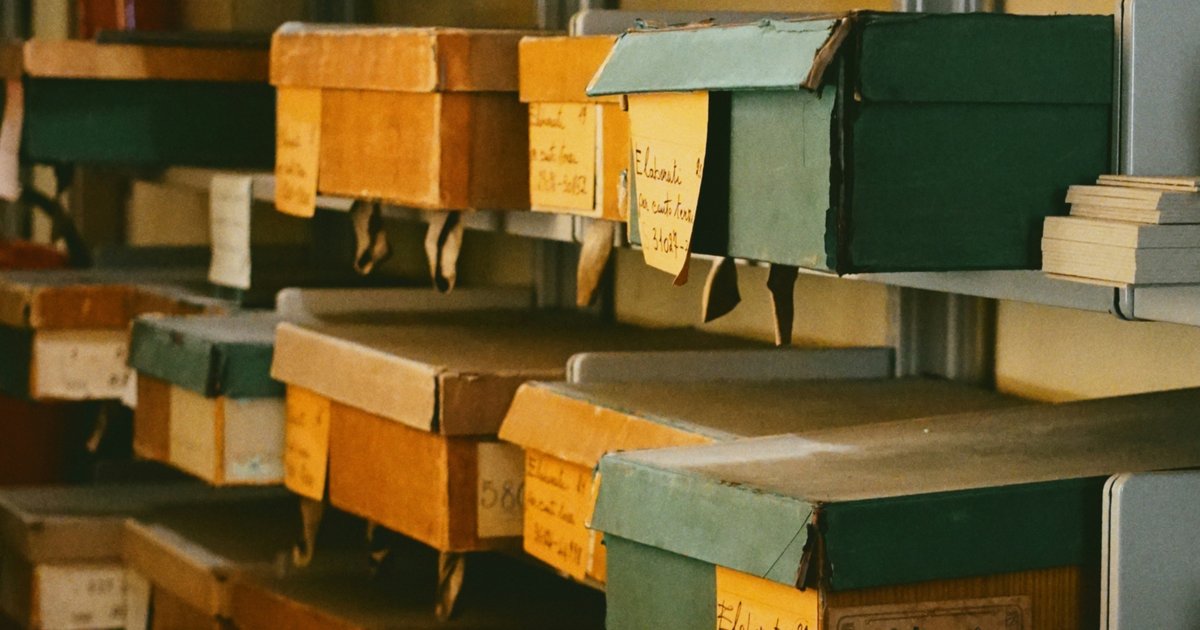
This includes auction house sale ledgers, often inaccessible to independent researchers gallery inventory books and correspondence, frequently sitting with a private estate rather than any public archive, and organised by the owner's own internal system rather than by artist or title. Exhibition catalogues, sometimes printed in runs of a few hundred copies and never scanned or catalogued, customs and export declarations, held in national archives and filed by transaction date or shipment, not by artwork. Probate records and estate inventories, filed with a court or county registry rather than a museum, and indexed by decedent name, not by object. Insurance appraisals and shipping manifests, scattered across whichever private or institutional archive happened to keep them, with retention policies that vary by firm and jurisdiction.
None of this shows up in a reverse image search. Most of it isn't online at all, and a meaningful share never will be, since digitisation of any given archive depends on that institution's budget, mandate, and digitisation scope.
That's really the whole shape of the problem. Provenance research is one branch of a much bigger issue: most historical records, whether they're genealogy certificates, land registries, or auction ledgers, were never digitised in the first place. If you want the wider picture of why that is, and how it plays out beyond art, our complete guide to archive research covers the same access problem as it shows up in genealogy, due diligence, and academic research.
The Getty Research Institute's provenance guide is a useful next stop if you want to go deeper into the databases and archives specialists in this field actually rely on.
7 practical steps to research an artwork's provenance
Start with what's on the object itself. Before any archive work, document everything physically present: labels on the back of the frame or canvas, gallery stamps, auction markers, inventory numbers, inscriptions, wax seals, old exhibition tags, framer's marks. These small marks are often the only thread connecting a painting to a specific event. Photograph the front, back, edges, and stretcher bars in raking light before you do anything else, and transcribe every mark exactly as it appears, including abbreviations and partial numbers, since a single digit can make or break your research.
Search auction records and sale catalogues. If the work, or something comparable by the same artist, has passed through a major auction house, there may be a public sale record worth checking first. Coverage is patchy, though. Sales from major houses after the 1980s are the most likely to be searchable online, since that's roughly when digital cataloguing became standard practice at the largest firms. Earlier or smaller-house sales are frequently only recorded in printed catalogues, held in a specific library or the auction house's own archive, and were never digitised at all. Treat an online database hit as a lead to confirm against the original catalogue entry, not as the record itself.
Trace the exhibition history. An exhibition catalogue is the printed record of a show, and it often lists the lender of each work alongside the checklist entry. If a label or inscription on the piece references a specific exhibition, that catalogue is worth tracking down, because the lender named in it can identify a private collector or institution that held the piece at that point in time. That's a genuine, dated link in the chain, not a guess.
Check gallery and dealer records. Many galleries kept, and some still hold, inventory ledgers, stock books, or correspondence documenting what they sold, to whom, and when, often cross-referenced by stock number rather than artist or title. These are rarely digitised, par for some of the major dealers of the 20th century, and are often held by the gallery itself, a specialist archive or have been passed on to larger archives or public institutions.
Look at customs, import, and notarial records. This matters most for artworks that crossed borders, whether shipped from abroad, bought on a trip, or moved during wartime displacement. Customs declarations, import permits, and notarial deeds of sale can establish exactly where a piece was, and who owned it, at a specific date, which makes them some of the strongest evidence available precisely because they're official government records. These sit in national or municipal archives, filed under the transaction or the individual, not the artwork, so the search has to start from a known name and approximate date rather than a title.
Cross-reference probate and estate records. When an owner dies, an estate inventory or probate filing sometimes lists specific artworks by description, occasionally with a valuation that helps confirm identity against other records. These are court or county records, and they can be some of the only surviving evidence that a particular collector owned a particular piece, especially for private collections that never passed through a public sale.
Build the chain, don't just collect fragments. A gallery label from 1961 and an auction listing from 2003 aren't a provenance on their own, they're two data points. The real work is confirming there isn't a gap, a different painting of similar description, or a break somewhere between them, by checking dimensions, medium, and description against each record rather than assuming a name match is enough. This is where inconsistent dates, name variants, transliteration differences, or missing links usually turn up, and it's the step most people researching this on their own get stuck on, because closing a gap almost always means reaching a document that isn't searchable from a desk.
For a deeper walkthrough of this specific step, the Smithsonian's guide to provenance research at the Archives of American Art is a good resource on cross-referencing and closing exactly this kind of gap.
When you hit a wall
At some point in most provenance projects, the trail leads to a document that exists but isn't reachable from where you are: a gallery's paper stock book still held by a family estate, an auction house archive that predates digitisation, a customs record in a national archive with no online index, a probate file only available in person at a county courthouse.
This is where provenance research stops being a search problem and becomes an access problem. The record exists. You just can't get to it from where you are. That's a different challenge to not knowing where to look, and it usually needs someone with legitimate access to the physical archive, not another database subscription.
That's the gap our platform, Source, closes. You post a request describing the document you need, and it gets matched with a vetted researcher who already has access to that archive, gallery estate, or registry. Most requests get a first response within a day, and the researcher already knows how that specific institution actually works, not just what its website says.
If you'd rather not run the project yourself at all, that's the other route through this: hand the whole investigation to a firm that does it full-time. Flynn & Giovani Art Provenance Research takes on the entire chain, from the initial physical examination of labels and stamps through archival research across auction houses, gallery estates, and national registries, and delivers a formal, documented provenance report suitable for insurers, auction houses, or legal counsel. For a work with real market value or a contested gap in its history, that's often the more efficient path than assembling the research piecemeal.
The same logic runs the other way too. If you already have standing access to a museum, auction house, or notarial archive, that access is worth something to someone right now. Art historians, PhD students, and independent researchers on Source pick up provenance requests alongside their existing work, set their own price, and keep 85 percent of the job value. Full details are on the how it works page.
What is artwork provenance?
Provenance is the documented chain of ownership for an artwork, from the artist's studio to today. It records every owner, sale, exhibition, and place the work has passed through, reconstructed as an unbroken sequence and built on primary documents rather than recollection.
What is the difference between provenance and attribution?
Attribution identifies who made a work, usually through connoisseurship and technical analysis. Provenance traces where the work has been and who owned it. They are separate questions, and neither stands on its own.
Why is artwork provenance research so difficult?
The records live in scattered, mostly undigitised sources: auction ledgers, gallery stock books, exhibition catalogues, customs declarations, and probate files, usually filed by name or transaction date rather than by artwork. Most of it is not online and never will be.
How do I research an artwork's provenance?
Start with the marks on the object itself, then search auction records, trace the exhibition history, check gallery and dealer records, look at customs and notarial records, cross-reference probate and estate records, and build the links into an unbroken chain. The hardest step is closing gaps, which usually means reaching a document that is not searchable online.
More questions? Read the full Source FAQ.
Post what you are looking for. A local researcher with access to the right archive will tell you if it can be found, usually within a day.
Post a request